Here's in-depth analysis of why Harmanpreet entered semi-final under-prepared

Six months before the start of the Women’s World T20, not many would’ve considered the Indian team good enough to have a shot at the title. Placed in a group alongside Australia and New Zealand, only a miracle would take them into the semi-final. This was the situation after they were outplayed in the T20I Tri-series at home and lost in the T20I edition of the Asia Cup for the first time ever. But things changed dramatically since head coach Ramesh Powar took over from Tushar Arothe.
Under Powar’s stint, India injected youngsters into the side which laid the road to improving their tactical game, especially in the T20I format. They have made some brave decisions such as keeping Mithali Raj out of the equation that too at a big tournament like the World T20. India made it to the semi-final of the tournament for the first time in four editions after knocking out New Zealand and upsetting Australia in the group stage. However, their journey came to an end when they lost to England by eight wickets in the semis.

Abdul Razzaq 109 not out off 72 v South Africa in Abu Dhabi 2010

Score on arrival: 136 for 5, chasing 287
Final score: 289 for 9, won by 1 wicket with 1 ball to spare

Abdul Razzaq smashed ten sixes, Pakistan razed 150 off the last 20 overs to come back from the dead, numbers which look normal in 2018, but were truly remarkable for the time.
Razzaq arrived in a position below the rest on this list, at the fall of the seventh wicket, and hit six sixes in the last four overs, all while batting with Wahab Riaz and Saeed Ajmal, Pakistan's numbers 10 and 11

For perspective, Pakistan's last four batsmen were dismissed for single figures, while Razzaq did his thing at the other end.

Yusuf Pathan 123 off 96 balls v New Zealand in Bengaluru 2010

Score on arrival: 108 for 4, chasing 316
Final score: 321 for 5, won by 5 wickets with 7 balls to spare

India had already sealed a five-match ODI series 3-0, and were looking jittery in a tall chase, having lost their top order on the cheap.
New Zealand's pacers then tested Yusuf Pathan with the short stuff, which he played out, while smashing the freebies they dished out every once in a while.

The marauding hundred arrived at a crucial point for Yusuf, coming as it did in the months leading to India's World Cup squad selection for the 2011 tournament at home. 


Ravi Bopara 101 not out off 75 balls v Ireland in Malahide 2013

Score on arrival: 48 for 4, chasing 266
Final score: 274 for 4, won by 6 wickets with 42 balls to spare

A one-off ODI in Ireland was threatening to swing the home side's way when James Taylor was bowled by Tim Murtagh, with 226 runs still needed off 210 balls.
 
Ravi Bopara combined with captain and hometown boy Eoin Morgan to get those 226 runs off just 28 overs, racing to his only ODI hundred off just 74 balls.

For a packed crowd in Malahide, who had seen encouraging signs of a shock victory all afternoon, it was all a bit of a kick in the teeth, all the more stinging given that Morgan had played such a key role.


Mahmudullah 102 not out off 107 balls v New Zealand in Cardiff ICC Champions Trophy 2017

Score on arrival: 33 for 4, chasing 266
Final score: 268 for 5, won by 5 wickets with 16 balls to spare

Bangladesh were routed by England, got a point out of a rain-affected game against Australia and had to win against New Zealand to qualify for the semi-final.
 
They were down and out at 33 for 4 in pursuit of 266, when Shakib Al Hasan and Mahmudullah combined to put together 224 runs, the second-highest for any wicket in Champions Trophy history.

It was another major statement win for a rising ODI power, their second successive progress to the knockout stage after their quarter-final run in World Cup 2015.


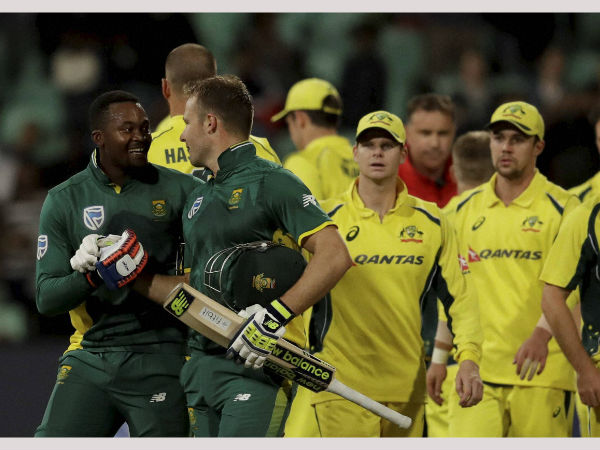
David Miller 118 off 124 balls v Australia in Durban 2016

Score on arrival: 179 for 4, chasing 372
Final score: 372 for 6, won by 4 wickets with 4 balls to spare

The second-highest ODI chase of all time had a lot of similarities with the highest: South Africa beat Australia in a bilateral ODI at home, thanks to rollicking knocks from dashers throughout their batting order.
South Africa lost all but one of their specialist batsmen with 155 runs still to get, but David Miller ensured that they sealed the five-match series against Australia in the third ODI with his third hundred in the format.

His knock completely overshadowed tons from Steven Smith and David Warner, a duo who would go on to suffer far greater setbacks in South Africa in the years to come.